A complete system for managing, monitoring and guiding type 1 diabetes.
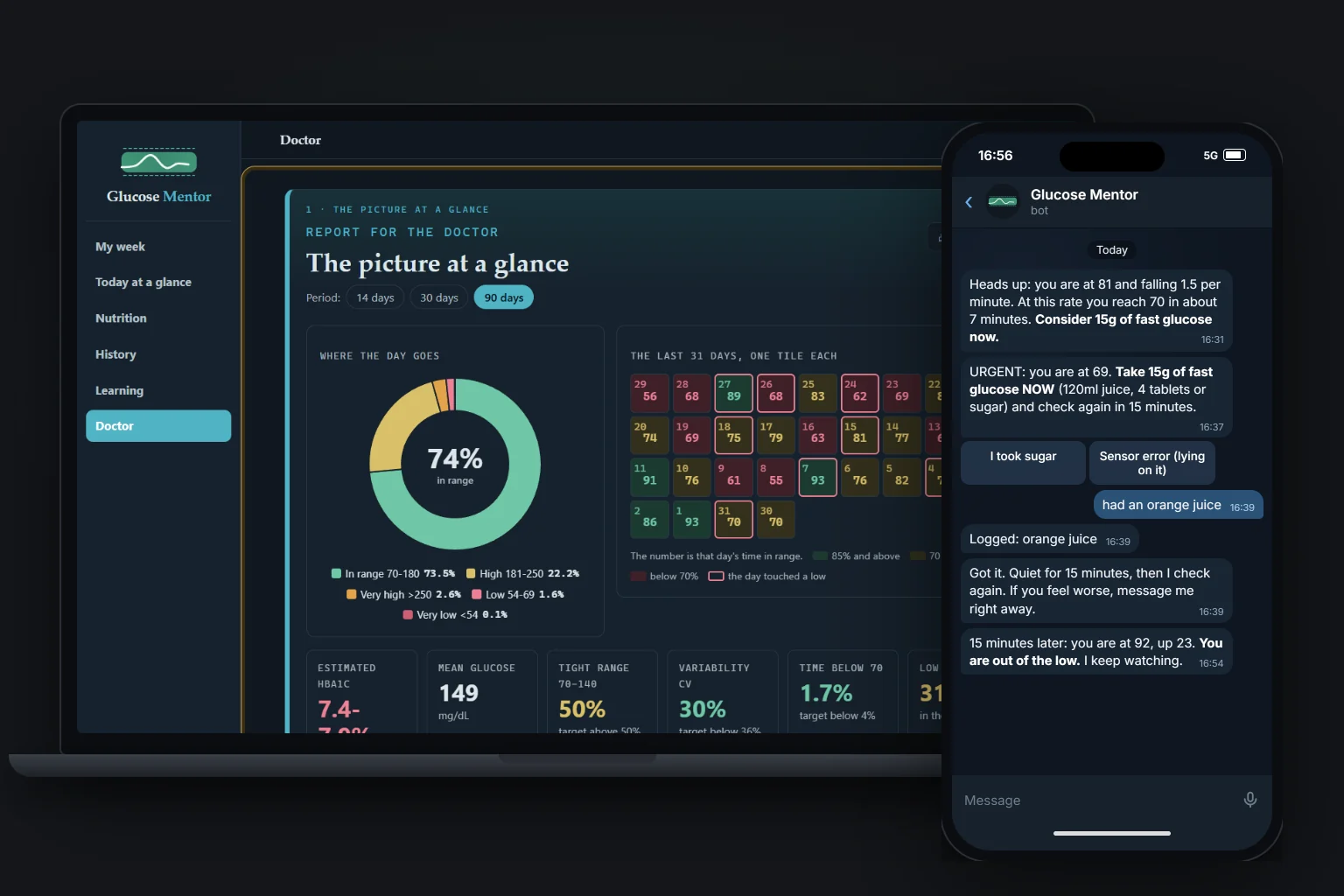 Open the image in full size
Every image on this page shows a fictional patient with demo data.
I built Glucose Mentor for myself first. I live with type 1 diabetes and wanted a system that watches with me around the clock, understands what I eat and gives my doctor the full picture at a glance.
Today it runs every day. It reads the continuous glucose monitor (CGM), talks with me in Telegram and keeps a dashboard that my doctor and I look at together. Doctors who have already seen it have received it very warmly.
Three things, one system
Managing
You write, say or photograph what you eat in Telegram. The system understands plain language, estimates the carbs and keeps the meal and dose diary by itself.
Monitoring
It watches the sensor around the clock. It warns before a low, keeps insisting on an urgent low until you answer and even remembers when the sensor expires.
Guiding
An AI mentor answers in plain words from your own data: why did I go up, what did that meal do, what pattern do my nights follow.
The mentor in Telegram
Day-to-day contact happens in one Telegram chat, like talking to someone who knows you well. A few moments from an ordinary day:
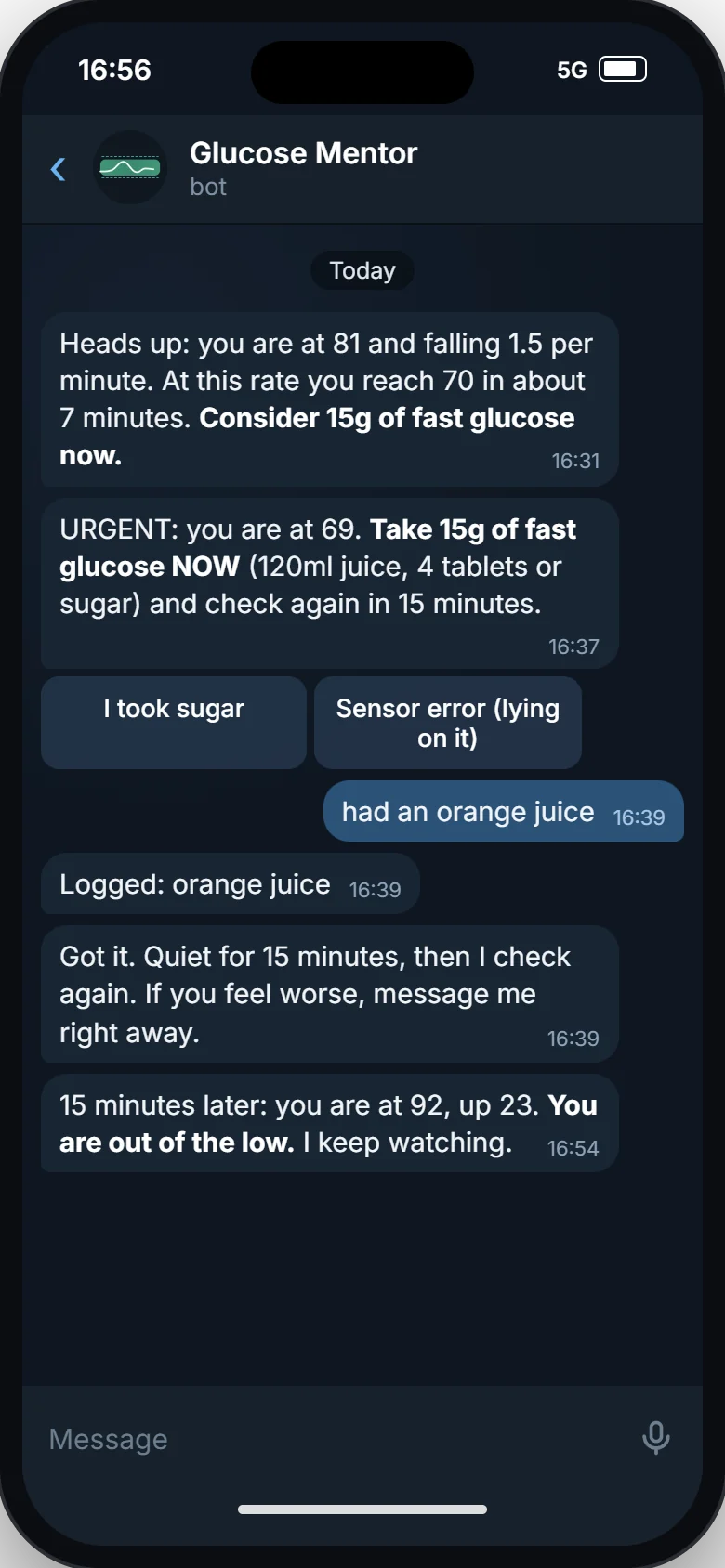
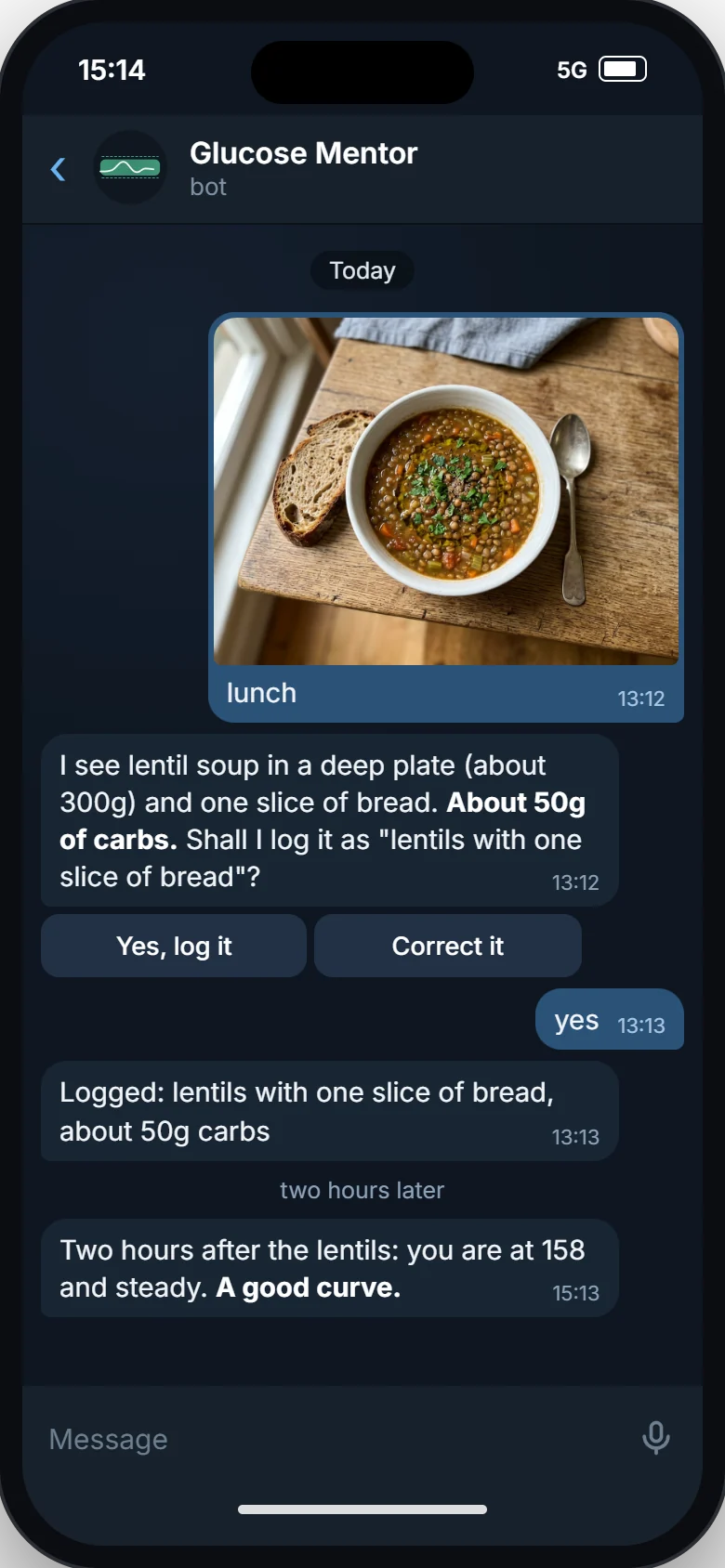
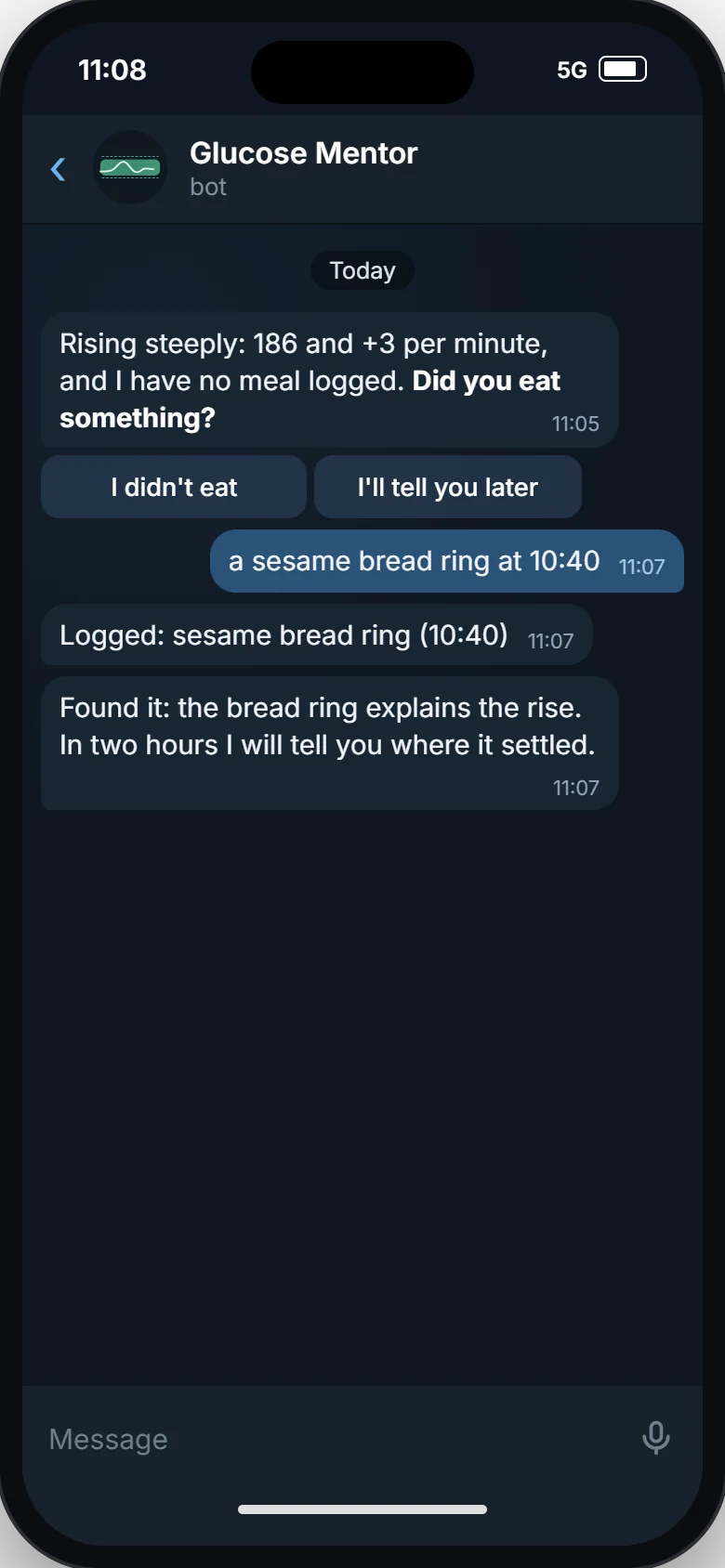
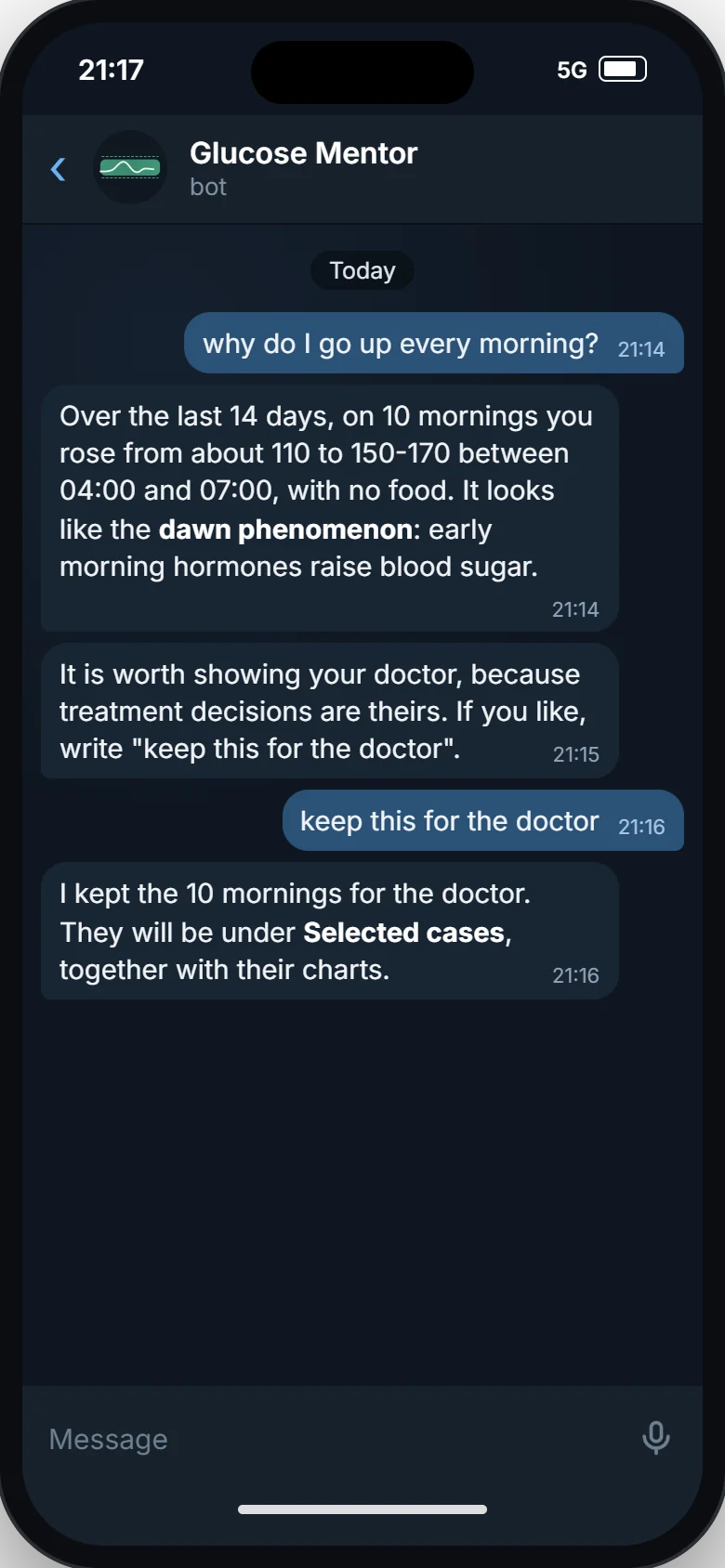
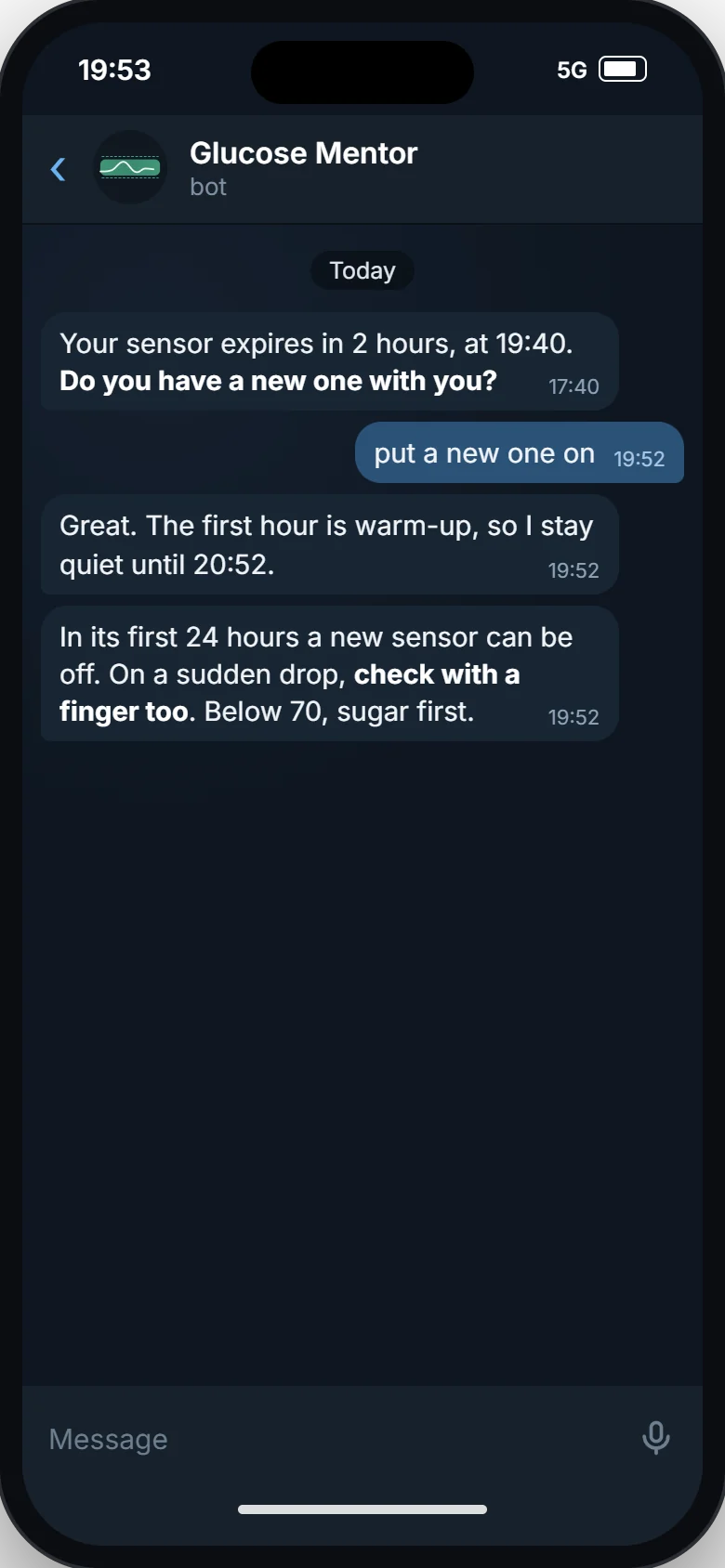
It also sends meal reminders, asks about the dose when a meal has none, corrects times and portions from one sentence and warns if the phone stops sending. The low alarm also runs on the phone itself, even when the computer is off.
The dashboard
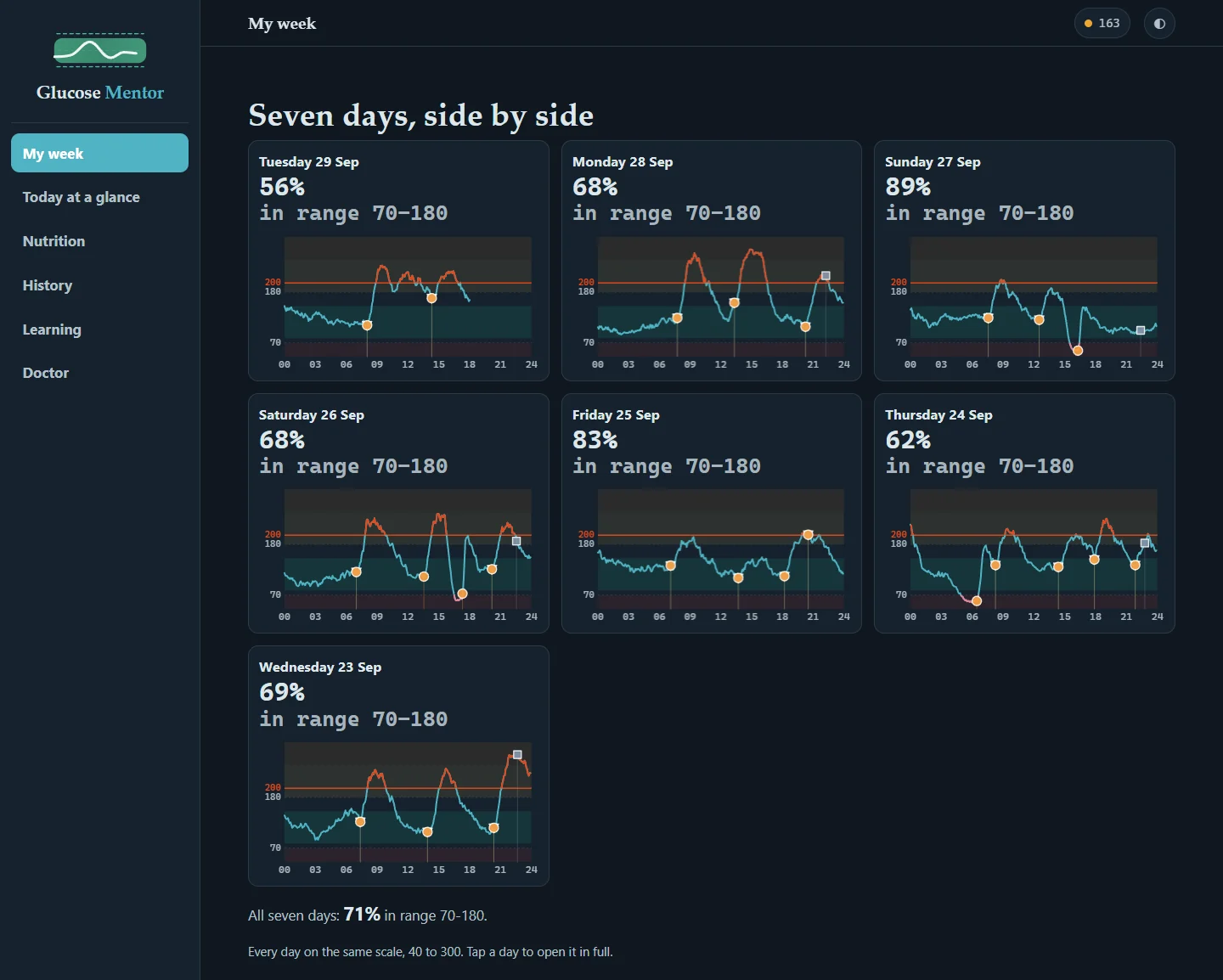
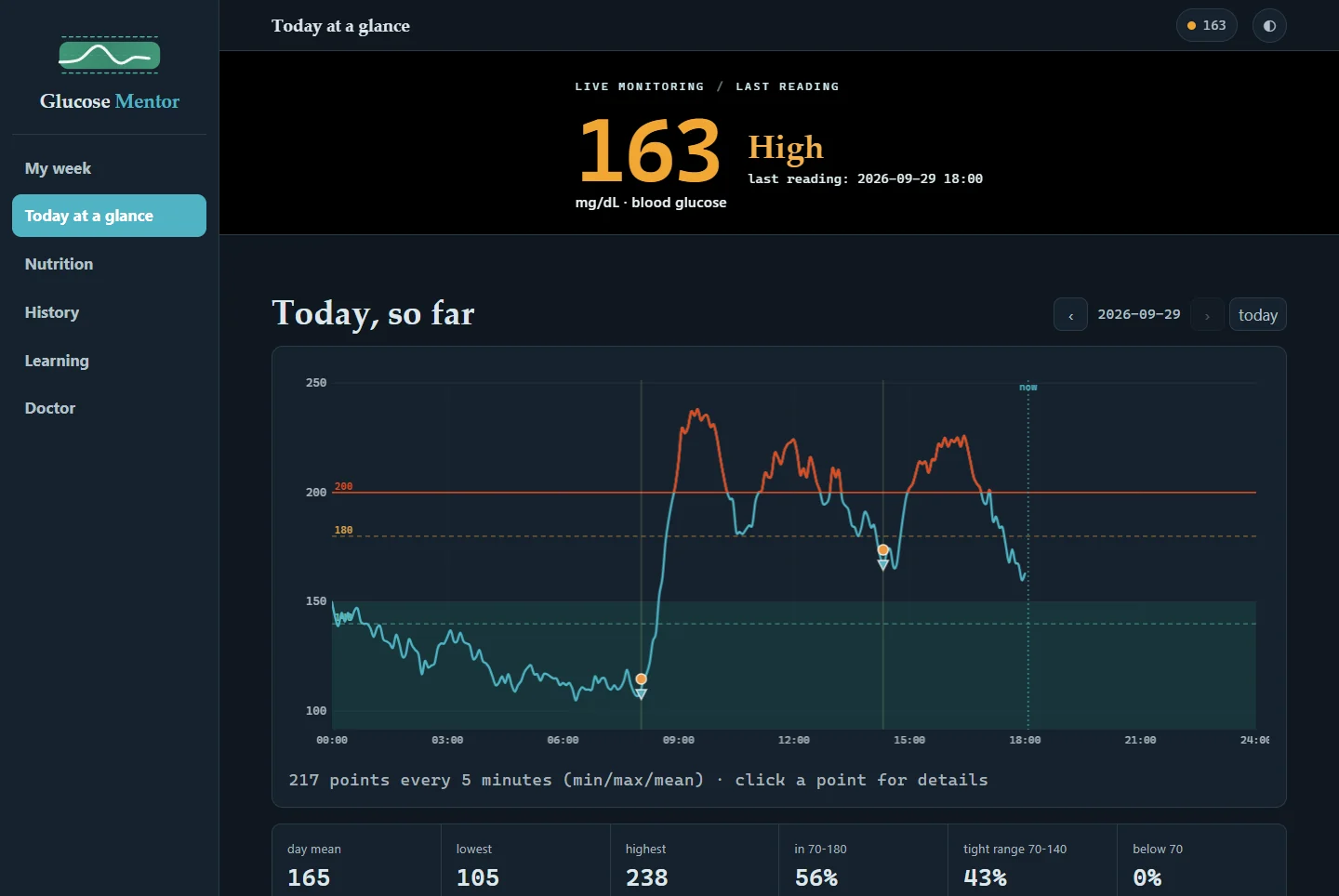
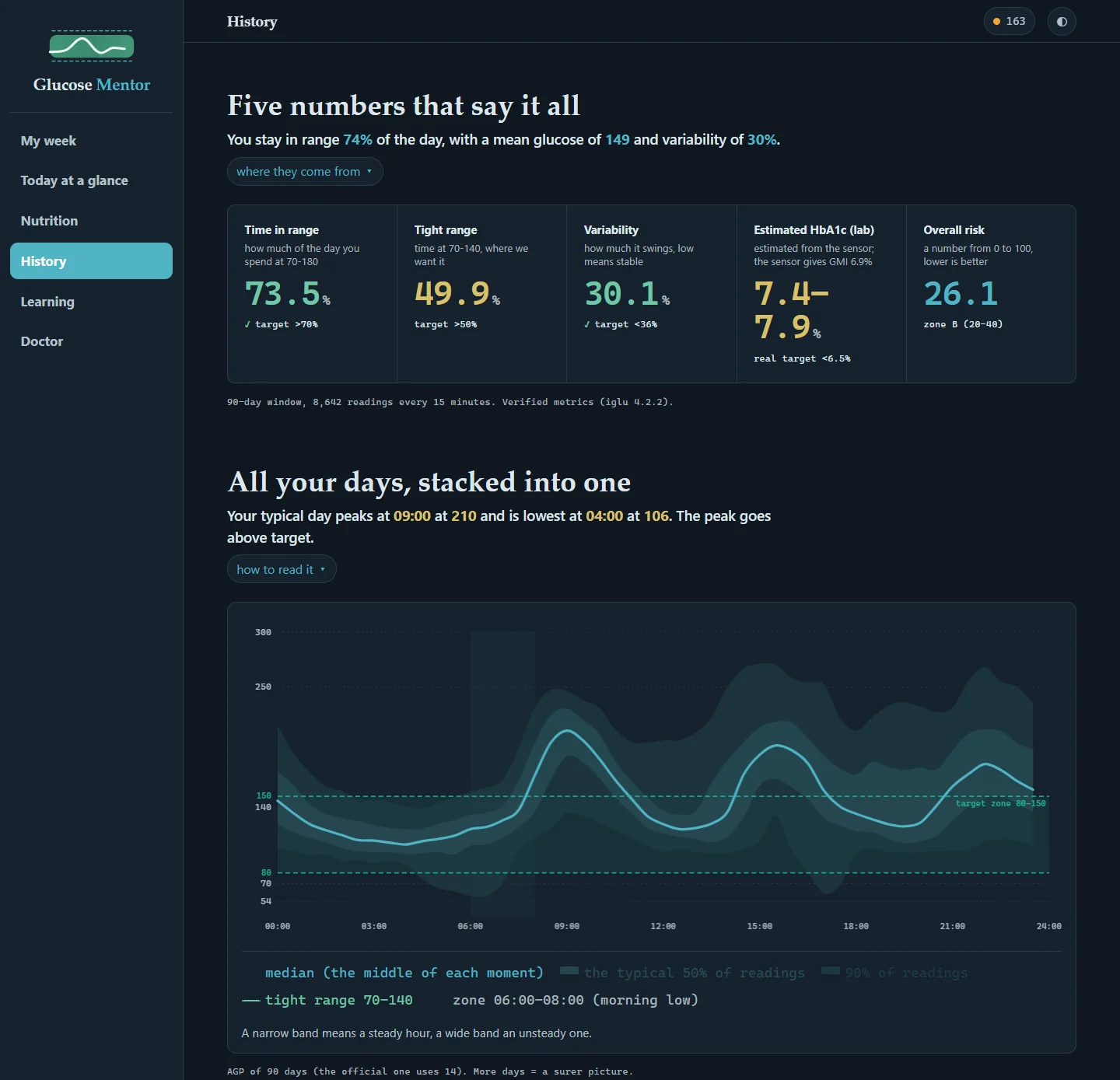
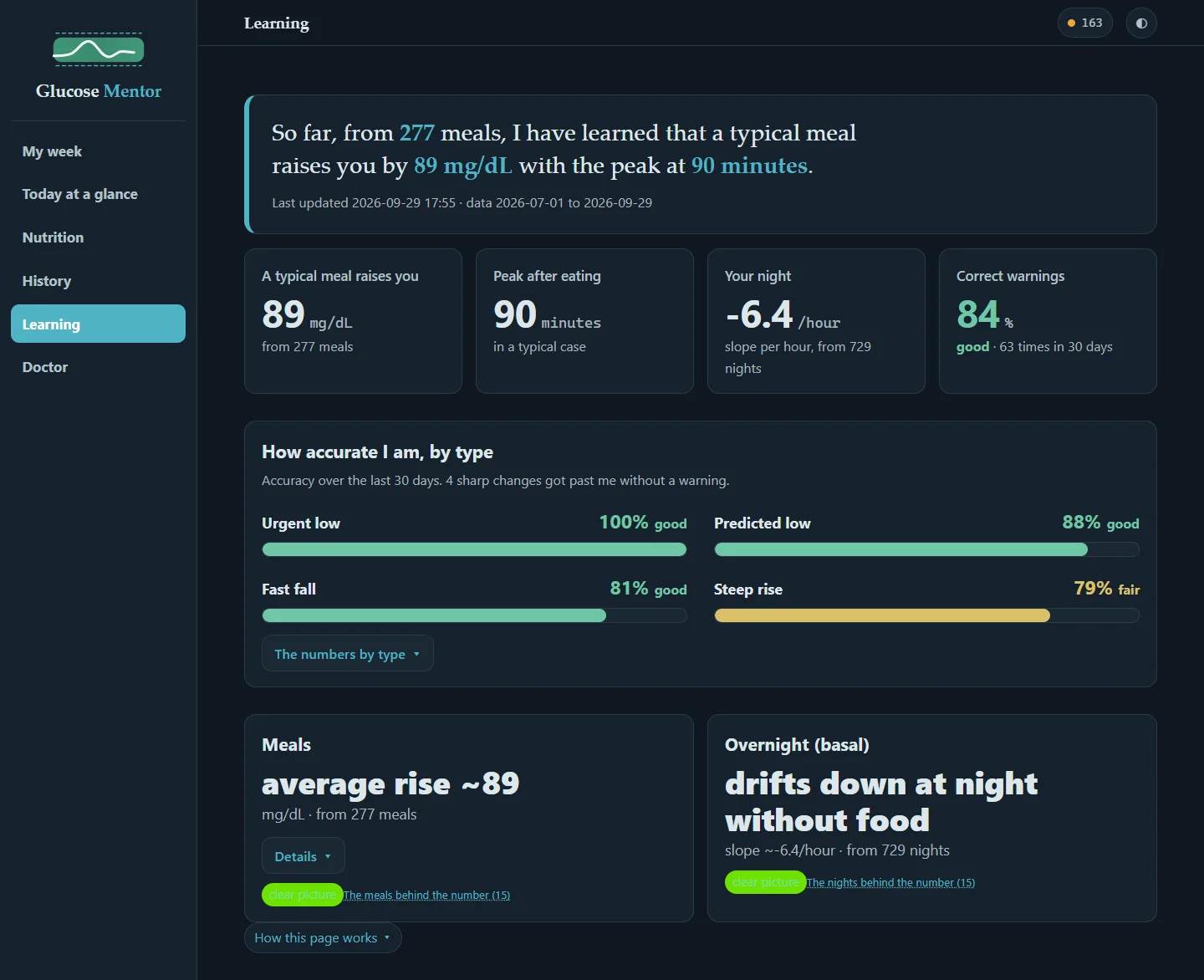
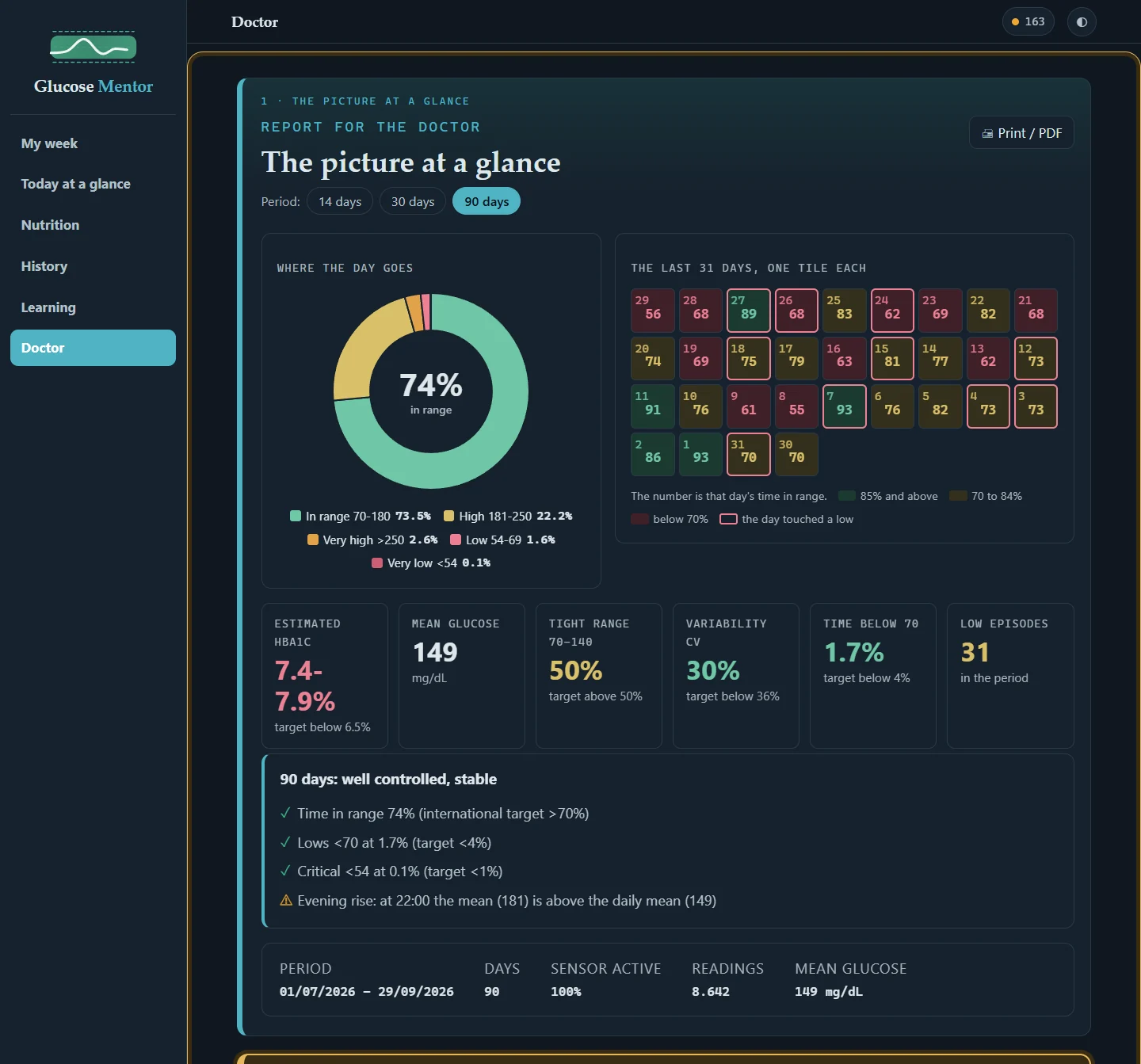
All the data ends up in a dashboard with large text, in dark and light themes. Each tab answers one question.
My week
Today at a glance
History
Learning
Doctor
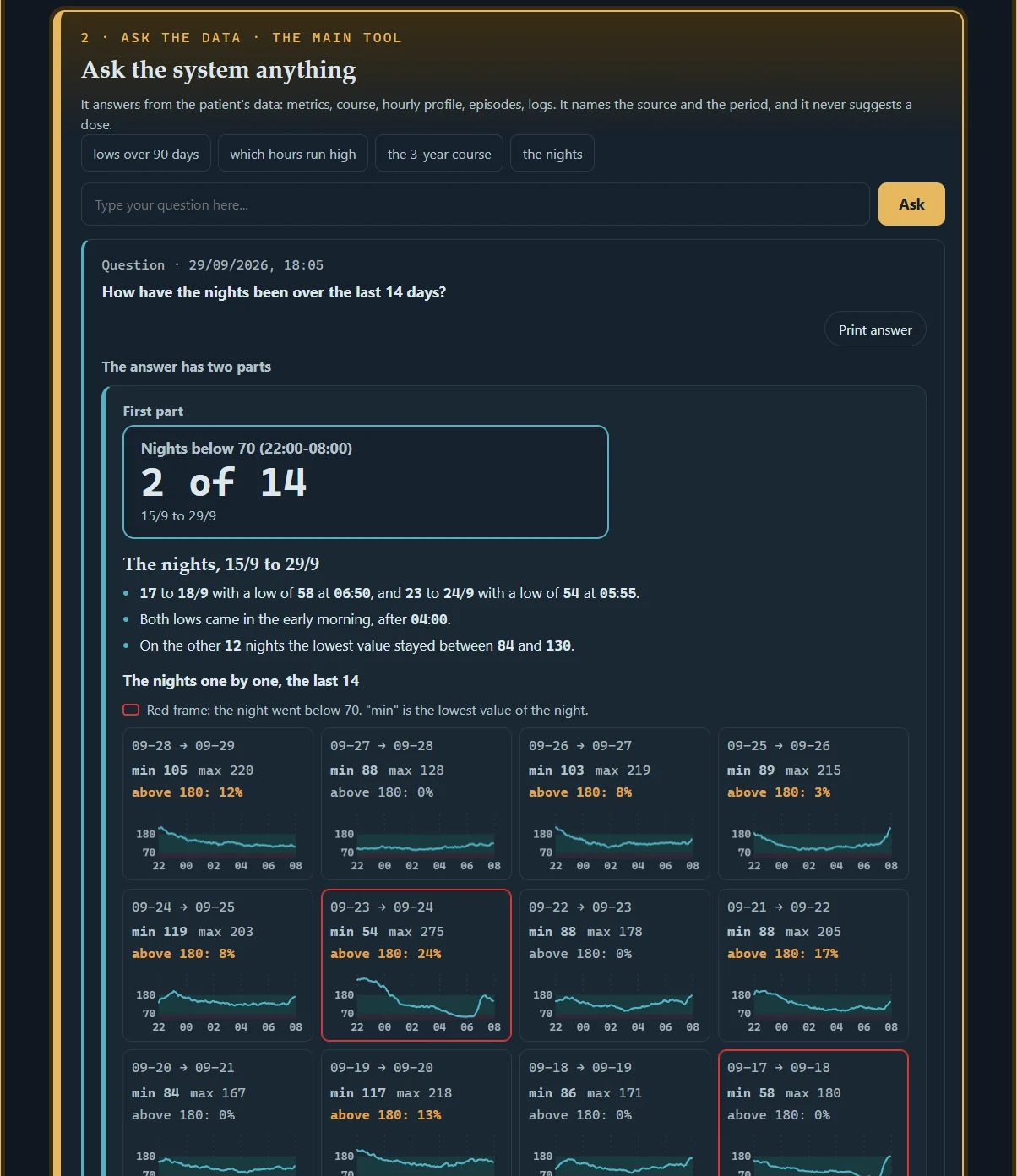
For the doctor: questions in plain language
The doctor opens their own page with a code and asks the way they would ask a colleague: "How have the nights been over the last 14 days?", "What happens after evening meals?".
The answer arrives in 10 to 18 seconds, as cards with the key number up front and up to three charts drawn from the data itself. It answers only from the patient’s data and says clearly what is missing. What would take digging through exports and reports is in front of the doctor in seconds.
The whole page prints as an A4 report. Anything the patient asked in Telegram to keep for the doctor appears under "Selected cases", with the meal, the curve and the conversation.
The safety rules
A system that talks about blood sugar needs firm limits. These apply to every answer:
- Insulin doses are decided by you and your doctor. The system records your doses and shows them to the doctor.
- On a low, glucose comes first: the instruction is always fast carbs now.
- While a low lasts, only the alarm speaks. Questions about food wait.
- Low warnings run around the clock, and their limits change only after testing against the history.
- Every answer rests on your data. For studies, the mentor searches and gives the source.
- For every treatment decision, the doctor has the final word.
How it is built
The system runs on the patient’s computer and updates a private, code-protected page for the doctor. The mentor uses Anthropic’s latest AI models (Claude) and talks in Telegram.
It is built around one person: their hours, their food, the targets they set with their doctor. That is exactly what Luram does: AI systems shaped around the people who use them.
Are you a diabetologist?
If you would like to see it up close, get in touch: Contact [email protected]. I will show it to you live, with demo data.